Razor Bumps vs. Razor Burn
Post Disclaimer
*We may earn a commission for purchases made using our links. Please see our disclosure to learn more.
You finish shaving, rinse your face, and notice redness, itching, or small bumps developing on your skin. Is it razor burn, razor bumps, or something else?
Although these two common shaving problems can look similar, they have different causes. Razor burn is skin irritation caused by shaving, while razor bumps develop when cut hairs curl back into the skin and trigger inflammation.
Razor burn generally appears immediately or shortly after shaving. Razor bumps often develop later, as the hair begins growing back. Both can affect the face, neck, legs, underarms, and bikini area, and both can make shaving uncomfortable.
Understanding the difference between razor bumps and razor burn helps you choose the right treatment instead of applying products that may make your skin more irritated.
This guide explains how to identify each condition, what causes it, how to manage symptoms, and which shaving habits and products can help prevent future problems.
“Razor burn and razor bumps both cause red, irritated skin. But razor bumps look like small pimples.”
— Cleveland Clinic, Razor Burn
Key Takeaways
- Razor burn is surface irritation that causes redness, burning, stinging, and tenderness shortly after shaving.
- Razor bumps are inflamed, pimple-like bumps associated with ingrown hairs.
- Razor burn often improves within hours to a few days, while razor bumps can persist for weeks if the underlying shaving problem continues.
- Shaving against the grain, using dull blades, and applying excessive pressure increase the risk of irritation.
- Gentle skincare, proper shaving technique, and avoiding excessively close shaves can help prevent both conditions.
- Persistent, infected, or painful bumps should be evaluated by a dermatologist.
4 Products That May Help Prevent Razor Bumps and Razor Burn
Different shaving products address different parts of the problem. Some help reduce friction during shaving, while others support moisture or help prevent ingrown hairs.
The following four products are worth considering based on your main skin concern.
1. Philips Norelco OneBlade 360


The Philips Norelco OneBlade 360 Hybrid Face Trimmer and Shaver is an innovative grooming tool designed to trim, edge, and shave any length of hair with ease. Featuring 360 Blade Technology, it flexes in all directions for consistent skin contact, making it easier to navigate tricky areas with fewer passes. The fast-moving cutter (12,000x per minute) works efficiently on longer hairs, while the dual protection system ensures a comfortable shaving experience. With a 5-in-1 adjustable comb (1-5mm) and wet/dry usability, this all-in-one tool is perfect for precision grooming at home or on the go.
- Versatile Grooming: Trims, edges, and shaves all hair lengths with a single device.
- Flexible 360 Blade: Adapts to facial contours for a smooth, comfortable shave with fewer passes.
- Wet & Dry Use: Works in the shower or dry, with a compact design for travel convenience.
- Limited Battery Life: Offers only 45 minutes of use per charge.
- No Power Adapter Included: Comes with a USB-A charging cable but lacks a wall adapter.
- Not for a Clean Shave: Designed for stubble and trimming, not a completely smooth shave.
Best for reducing excessively close shaving
The Philips Norelco OneBlade 360 is an electric grooming tool designed for trimming, edging, and shaving facial hair.
Its flexible blade follows facial contours and is designed to avoid shaving as closely as a conventional manual blade.
For people who repeatedly develop razor bumps, leaving a small amount of stubble may help reduce the chance of hairs becoming trapped beneath the skin.
Why consider it
- Provides trimming and shaving functions
- Offers an alternative to traditional close shaving
- Has a flexible blade for facial contours
- Allows greater control over shaving length with compatible comb attachments
Potential drawback: It may not provide the completely smooth finish some users prefer.
An electric tool is not guaranteed to prevent razor bumps. Using excessive pressure or repeatedly passing over irritated areas can still cause discomfort.
2. Aveeno Therapeutic Shave Gel


Aveeno Therapeutic Shave Gel is designed to offer relief for dry and sensitive skin, ensuring a close, smooth shave while preventing irritation. The formula combines the power of soothing oat and Vitamin E to hydrate and protect the skin against razor bumps, burns, and cuts. Ideal for those with dry, easily irritated skin, this fragrance-free gel provides a lubricating barrier that helps reduce friction, allowing for a comfortable shave. Its therapeutic formula is allergy-tested and free from soaps, making it safe for sensitive skin. With a dermatologist-recommended brand backing, this shave gel is a trusted option for those seeking smooth, healthy-looking skin with every shave.
- Soothing Ingredients: Contains oat and Vitamin E to moisturize and protect dry skin.
- Fragrance-Free: Suitable for those with sensitive skin and fragrance allergies.
- Prevents Razor Irritation: Reduces the risk of razor bumps, burns, nicks, and cuts for a smoother shave.
- Non-Lathering: Some may prefer a shaving gel that lathers more.
- May Feel Greasy: The rich, moisturizing formula may feel too thick for some users.
- Smaller Size: At 7 ounces, it may require frequent repurchasing for regular shavers.
Best for reducing friction during shaving
Aveeno Therapeutic Shave Gel is formulated with oat and vitamin E to support a smoother shave.
Its fragrance-free formula is designed for skin that may become dry or easily irritated.
A moisturizing shaving gel creates a layer of lubrication between the razor and skin, helping reduce unnecessary dragging.
Why consider it
- Fragrance-free formula
- Contains moisturizing oat
- Designed for sensitive, dry skin
- Helps improve razor glide during shaving
Potential drawback: It cannot prevent irritation caused by excessive pressure, dull blades, or poor shaving technique.
Apply it to damp skin and maintain a comfortable layer of lubrication throughout shaving.
3. CeraVe Moisturizing Cream


CeraVe Moisturizing Cream is a rich, fragrance-free moisturizer designed to hydrate dry skin and support the skin's natural protective barrier. Formulated with three essential ceramides and hyaluronic acid, it helps retain moisture and relieve dryness. Its non-comedogenic formula is suitable for daily use on the face and body. The 19 oz container offers a practical option for maintaining soft, hydrated skin, especially after shaving.
- Deep Hydration: Ceramides and hyaluronic acid help retain moisture.
- Gentle Formula: Fragrance-free and non-comedogenic.
- Multi-Purpose: Suitable for daily face and body use.
- Thick Texture: May feel heavy on oily skin.
- No Exfoliation: Does not directly treat ingrown hairs.
- Large Container: Less convenient for travel.
Best for dry skin and post-shave moisture
CeraVe Moisturizing Cream is a fragrance-free moisturizer containing ceramides and hyaluronic acid.
Ceramides are naturally occurring skin lipids that help maintain the skin’s protective barrier.
After shaving, moisturizing can help limit dryness and discomfort, particularly for people who experience tight or flaky skin.
Why consider it
- Contains three essential ceramides
- Includes hyaluronic acid for hydration
- Fragrance-free and non-comedogenic
- Suitable for use on the face and body
Potential drawback: Its rich consistency may feel heavy for people who prefer lightweight lotions.
This product supports hydration but does not directly remove ingrown hairs or treat infected follicles.
4. First Aid Beauty Ingrown Hair Pads With BHA + AHA
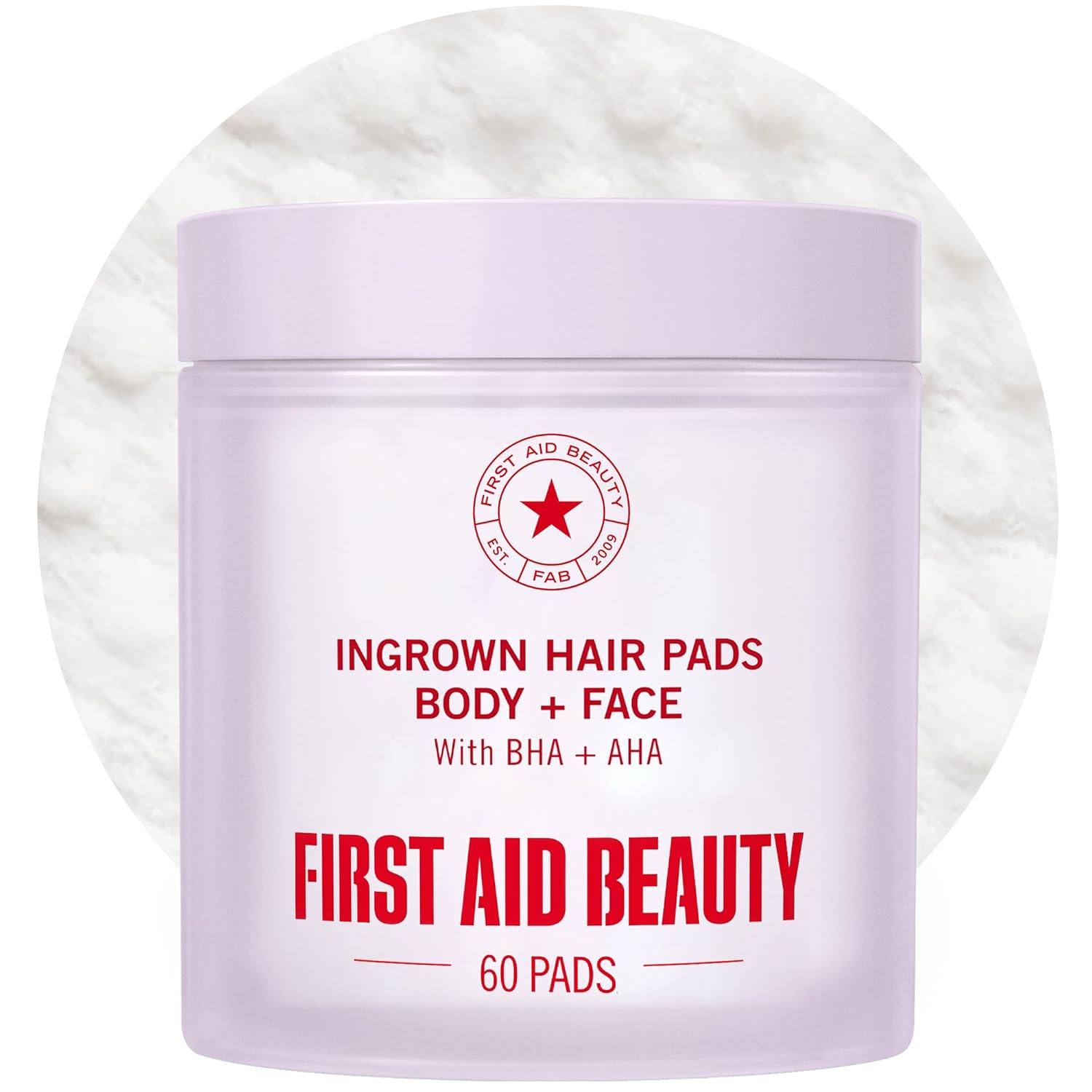


First Aid Beauty Ingrown Hair Pads are pre-soaked exfoliating pads designed to help reduce the appearance of ingrown hairs and razor bumps after shaving. The formula uses chemical exfoliation to remove dead skin buildup that can trap hairs beneath the surface, making it useful for areas such as the underarms, bikini line, legs, face, and neck. The convenient pad format also makes application quick and easy, especially for people who regularly deal with post-shave bumps.
- Easy Application: Pre-soaked pads make targeted use quick and mess-free.
- Exfoliating Formula: Helps remove dead skin that can contribute to trapped hairs.
- Multi-Area Use: Suitable for areas such as the bikini line, underarms, legs, face, and neck.
- Higher Price: Costs more than many basic liquid exfoliating treatments.
- May Irritate: Exfoliating ingredients can feel strong on very sensitive or freshly shaved skin.
- Ongoing Use: Regular application may be needed to maintain smoother-looking skin.
Best for preventing recurring ingrown hairs
First Aid Beauty Ingrown Hair Pads combine glycolic acid and salicylic acid to exfoliate dead skin cells.
These ingredients may help reduce buildup around follicles, making the product a potential addition to a routine for recurring ingrown hairs.
The formula is designed for areas such as the neck, legs, and bikini line.
Why consider it
- Contains glycolic and salicylic acids
- Designed to help prevent ingrown hairs
- Provides chemical exfoliation without a physical scrub
- Can be incorporated into a post-shaving routine
Potential drawback: Exfoliating acids can irritate sensitive or compromised skin.
The manufacturer recommends waiting at least 24 hours after hair removal before use. If your skin is still irritated, wait longer. Do not apply the pads to damaged skin, and use sun protection on exposed treated areas.
Choosing the right product: If burning and dryness are your main concerns, prioritize lubrication and moisturizing. If ingrown hairs are the recurring problem, consider adjusting your shaving tool and technique before adding an exfoliating treatment.
Razor Bumps vs. Razor Burn – The Main Differences
The easiest way to distinguish these conditions is to look at when the irritation appears, what it looks like, and whether individual hairs are involved.
| Feature | Razor Burn | Razor Bumps |
|---|---|---|
| Main cause | Friction and skin irritation | Ingrown hairs |
| Appearance | Red or irritated patches | Small, raised, pimple-like bumps |
| When it appears | Immediately or soon after shaving | Often one or more days later |
| Common symptoms | Burning, stinging, itching, tenderness | Itching, swelling, tenderness, inflammation |
| Hair involvement | No ingrown hair required | Usually involves hair growing into the skin |
| Typical duration | Hours to several days | Days to weeks or longer |
| Main approach | Calm irritation and protect the skin barrier | Reduce ingrown hairs and avoid close shaving |
These differences are useful clues, but appearance alone cannot always confirm the cause. Razor burn and razor bumps can also occur together.
What Is Razor Burn?
Razor burn is a temporary inflammatory reaction that develops when shaving irritates the outer layer of the skin.
A razor blade removes hair, but it also passes directly over the skin’s surface. Repeated strokes, excessive pressure, or insufficient lubrication can damage the protective skin barrier.
According to Cleveland Clinic, shaving-related irritation can involve small disruptions in the epidermis, reduced hydration, and inflammation.
What Does Razor Burn Look Like?
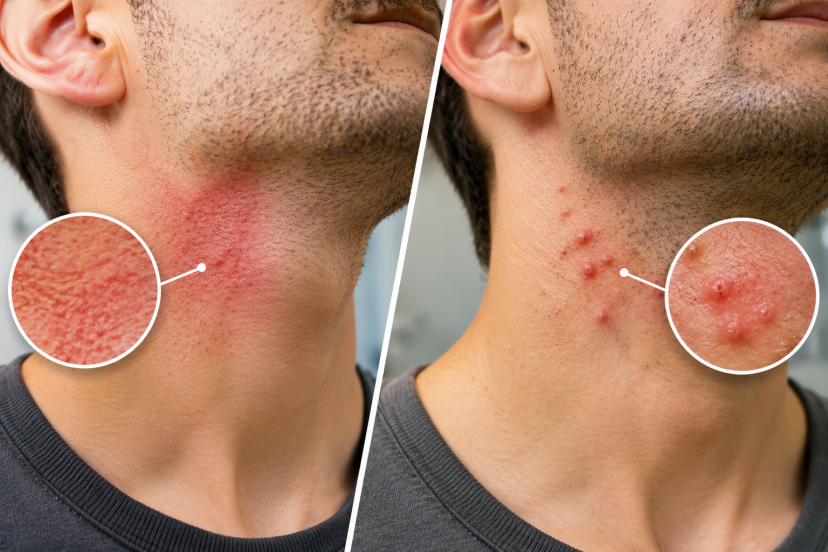
Razor burn commonly appears as a broad, irritated patch rather than separate bumps around individual hair follicles.
Symptoms include:
- Redness or darker discoloration in the shaved area
- Burning or stinging sensations
- Mild swelling and tenderness
- Itching or increased sensitivity
- Dryness or tightness after shaving
On darker skin tones, inflammation may appear darker, purple, or less visibly red. Burning and tenderness can be important clues even when redness is difficult to see.
Razor burn usually develops within minutes after shaving, although irritation may become more noticeable afterward.
What Causes Razor Burn?
Several shaving habits increase the likelihood of developing razor burn.
Dry shaving
Using a razor without water or shaving cream increases friction between the blade and skin. This can cause irritation even when the razor is sharp.
Using a dull razor
A worn blade may pull or drag across the skin instead of cutting hair efficiently. This encourages repeated strokes and unnecessary pressure.
Shaving against the grain
Moving a traditional razor against the direction of hair growth can produce a closer shave, but it can also increase irritation.
Applying excessive pressure
Pressing down harder does not necessarily improve shaving results. Instead, it increases contact between the blade and skin.
Using irritating products
Fragranced aftershaves, alcohol-heavy formulas, and aggressive exfoliants may worsen already-sensitive skin.
People with dry or sensitive skin may be particularly prone to razor burn, although anyone who shaves can develop it.
What Are Razor Bumps?
Razor bumps, medically known as pseudofolliculitis barbae, are inflammatory bumps that develop when shaved hairs grow back into the skin.
Unlike razor burn, which primarily affects the skin surface, razor bumps involve the hair follicles.
After shaving, a hair may have a sharp tip. As it grows, it can curve backward and penetrate the surrounding skin or become trapped beneath the surface.
The body reacts to the embedded hair as a foreign object, producing inflammation.
What Do Razor Bumps Look Like?
Razor bumps typically appear as individual raised spots near hair follicles.
Common signs include:
- Small, inflamed, pimple-like bumps
- Itching or tenderness around individual hairs
- Visible hairs trapped beneath the skin
- Swelling around hair follicles
- Dark marks remaining after inflammation improves
- Occasionally, pustules or more pronounced inflammation
Razor bumps frequently affect the neck and beard area, particularly where hairs grow in different directions.
They can also develop on the legs, scalp, underarms, and bikini line.
Who Is More Likely to Develop Razor Bumps?
Anyone can experience ingrown hairs, but people with coarse, tightly curled hair face a greater risk.
Curly hairs are more likely to bend back toward the skin after being cut.
Shaving too closely can increase this risk because the cut hair may retract beneath the skin before growing outward.
The American Academy of Dermatology explains that stopping close shaving and allowing hairs to grow can help resolve razor bumps.
However, not everyone can stop shaving because of grooming preferences or workplace requirements. In these situations, changing shaving techniques may help reduce recurring bumps.
How to Tell Whether You Have Razor Burn or Razor Bumps
Consider three factors before deciding how to treat your skin.
1. Check When the Irritation Appeared
If your skin begins burning or stinging immediately after shaving, razor burn is more likely.
If you notice small, raised spots as your hair grows back over the following days, razor bumps may be responsible.
2. Examine the Appearance
Razor burn generally produces widespread irritation across the shaved area.
Razor bumps are more localized and often appear around individual hair follicles.
You may even notice a curved hair beneath a bump.
3. Pay Attention to the Symptoms
Razor burn often feels hot, tender, or uncomfortable when skincare products touch the affected area.
Razor bumps may feel itchy or painful when pressed and can remain noticeable after the surrounding skin has recovered.
Neither timing nor appearance is completely reliable on its own.
If symptoms are unusual, severe, or persistent, a healthcare professional can help identify the cause.
How to Treat Razor Burn
Most mild cases of razor burn improve with gentle skincare and time.
The goal is to calm inflammation, reduce friction, and help the skin barrier recover.
Stop Shaving Until the Irritation Improves
Continuing to shave irritated skin can prolong discomfort.
Avoid shaving the affected area until burning, redness, and tenderness have substantially improved.
If grooming is necessary, consider using a guarded trimmer that does not cut as closely.
Apply a Cool Compress
A cool compress can provide temporary relief from burning and swelling.
Soak a clean washcloth in cool water, wring out the excess moisture, and place it gently against the affected skin for several minutes.
Avoid applying ice directly to irritated skin.
Use a Gentle Moisturizer
After cleansing, apply a fragrance-free moisturizer to help reduce dryness and support the skin barrier.
Products containing ceramides, glycerin, or other moisturizing ingredients may be useful.
Avoid aggressively rubbing the skin while applying the product.
Avoid Products That Sting
Temporarily stop using strong exfoliating acids, fragranced aftershaves, abrasive scrubs, and other products that aggravate the affected area.
If a moisturizer or treatment causes persistent burning, discontinue use.
Mild razor burn often improves within a few days. If symptoms worsen or fail to improve, seek medical advice.
How to Treat Razor Bumps
Razor bumps require a slightly different approach because the underlying problem involves hair growing into the skin.
Reducing new ingrown hairs is just as important as calming existing inflammation.
Allow Ingrown Hairs to Grow Out
Temporarily avoiding close shaving gives trapped hairs an opportunity to emerge naturally.
For recurring razor bumps, leaving short stubble may be more comfortable than repeatedly shaving directly against the skin.
Apply a Warm Compress
Unlike the cool compress commonly used for razor burn, a warm, damp washcloth may help soften the skin and hair around ingrown hairs.
Apply gentle warmth for several minutes without rubbing or squeezing the bumps.
Avoid Picking or Digging
Squeezing razor bumps or digging for trapped hairs can damage the skin, introduce bacteria, and increase the risk of scarring.
Do not use tweezers to pluck ingrown hairs from the root.
If a hair remains deeply embedded or causes significant pain, professional evaluation is safer than attempting to remove it aggressively.
Consider Gentle Chemical Exfoliation
Ingredients such as salicylic acid and glycolic acid can help remove accumulated dead skin cells that may interfere with normal hair growth.
However, exfoliating products are not appropriate for every case.
Avoid applying acids to broken, infected, severely inflamed, or actively burning skin. Begin cautiously once irritation has settled, and follow product directions.
How to Prevent Razor Bumps and Razor Burn
Prevention begins before the razor touches your skin.
A consistent routine can help reduce friction, prevent excessive closeness, and limit irritation around hair follicles.
Prepare Your Skin Before Shaving
Wash the area with warm water and a gentle cleanser.
Shaving after a warm shower can make hair softer and easier to cut.
Apply a moisturizing shaving gel or cream and allow it to soften the hair before beginning.
Avoid shaving dry skin with a traditional manual razor.
Follow the Direction of Hair Growth
For manual shaving, follow the natural direction of hair growth rather than shaving against it.
This is especially important around the neck, where hair may grow upward, sideways, or in different patterns.
Check the direction of growth in each area instead of assuming all facial hair grows downward.
Use a Sharp Razor and Light Pressure
A clean, sharp blade should cut hair without excessive force.
Use short, controlled strokes and rinse the blade regularly.
Avoid repeatedly shaving the same spot to achieve perfectly smooth skin.
The American Academy of Dermatology recommends replacing disposable razor blades after approximately five to seven shaves, depending on the razor and its condition.
Avoid Stretching Your Skin
Pulling skin tightly while shaving can allow hairs to be cut too close to the surface.
When the skin returns to its normal position, those hairs may retract and become ingrown.
Keep the skin relaxed and use light pressure, especially if you frequently develop razor bumps.
Finish With Gentle Skincare
Rinse away shaving cream, then apply a cool, damp washcloth if your skin feels irritated.
Follow with a fragrance-free moisturizer.
Avoid tight clothing that rubs against newly shaved legs, underarms, or the bikini area.
Also, rinse and dry your shaving tools and store them somewhere clean and dry.
Following these habits consistently is often more helpful than repeatedly switching between products.
Razor Bumps, Razor Burn, and Folliculitis
Not every bump that appears after shaving is a razor bump.
Folliculitis is inflammation of the hair follicles and can sometimes involve bacterial or fungal infection.
It may resemble razor bumps because both can produce small, tender, pimple-like spots.
However, pseudofolliculitis barbae is primarily caused by ingrown hairs rather than infection.
Folliculitis may involve pustules, increasing soreness, or spreading inflammation. The two conditions can also occur together.
Avoid assuming that every pus-filled bump can be managed with exfoliating products.
According to the American Academy of Dermatology, some cases of folliculitis require medical treatment.
When Should You See a Dermatologist?
Mild shaving irritation is common, but persistent symptoms deserve attention.
Consider professional evaluation if:
- Razor bumps repeatedly return despite changing shaving habits.
- The affected skin develops increasing pain, warmth, or swelling.
- You notice spreading redness, pus, or other signs of infection.
- Dark marks or scars develop after repeated inflammation.
- Irritation fails to improve after avoiding shaving and using gentle skincare.
Seek prompt medical care if redness spreads rapidly or is accompanied by fever.
Recurring razor bumps may require prescription treatment or alternative hair-removal methods.
A dermatologist can also determine whether the problem involves ingrown hairs, folliculitis, contact dermatitis, or another skin condition.
Frequently Asked Questions
1. Can You Have Razor Bumps and Razor Burn at the Same Time?
Yes. Razor burn and razor bumps can occur together because both may result from the same shaving routine.
For example, shaving too closely with excessive pressure may immediately irritate the skin and also increase the likelihood of ingrown hairs as the hair grows back.
When both occur, focus first on calming the irritated skin and temporarily avoiding close shaving.
2. How Long Do Razor Bumps and Razor Burn Last?
Razor burn often improves within several hours to a few days, depending on the severity of the irritation.
Razor bumps may remain for days or weeks because ingrown hairs need time to grow outward and inflammation must subside.
According to the American Academy of Dermatology, after stopping shaving, some people notice fewer bumps within a month, with complete clearing sometimes taking up to three months.
Persistent or worsening symptoms should be assessed by a healthcare professional.
3. Do Razor Bumps Mean Your Razor Is Dirty?
Not necessarily. Razor bumps primarily develop because shaved hairs curl or grow back into the skin.
Even a clean razor can cause razor bumps if it cuts hair too closely.
However, using dirty or poorly maintained shaving tools may increase the risk of other skin problems, including infection.
Keeping blades clean, replacing worn components, and storing razors in a dry location remain important.
4. Does Shaving Against the Grain Cause Razor Burn or Razor Bumps?
Shaving against the grain can contribute to both.
It may increase friction and surface irritation, causing razor burn. It can also cut hair extremely close to the skin, increasing the chance that hairs become ingrown.
People prone to either condition should generally shave in the direction of hair growth when using a manual razor.
Some electric grooming tools have different operating instructions, so follow the manufacturer’s recommendations while avoiding unnecessary pressure.
5. Is It Better to Use an Electric Razor if You Get Razor Bumps?
An electric razor or guarded trimmer may be a useful option if close shaving repeatedly causes ingrown hairs.
These tools can allow hair to remain slightly above the skin, reducing the need for a completely smooth shave.
However, electric shaving does not eliminate irritation for everyone. Repeated passes, worn cutting heads, and excessive pressure can still aggravate the skin.
The best option depends on your hair texture, skin sensitivity, and grooming needs.
A Better Shave Starts With Understanding Your Skin
Razor bumps and razor burn may seem similar, but understanding their different causes can make post-shave irritation easier to manage.
Razor burn is primarily a reaction to shaving friction and skin-barrier disruption. Razor bumps develop when cut hairs grow into the skin and trigger inflammation.
Both conditions can often be improved through gentler shaving habits, proper preparation, and suitable skincare products.
The most important change is not necessarily buying a more expensive razor or adding more products. It is finding a shaving routine that removes unwanted hair without repeatedly irritating the skin.
Prioritize comfortable shaving over an excessively close finish, and give your skin time to recover when irritation develops.
With consistent care and the right technique, you may be able to reduce both razor burn and recurring razor bumps.
Medical disclaimer: This article is intended for general grooming and educational purposes. It does not replace professional medical advice, diagnosis, or treatment. Consult a qualified healthcare professional for persistent, severe, or potentially infected skin symptoms.