How to Get Rid of Razor Bumps Fast: Treatment & Prevention
Post Disclaimer
*We may earn a commission for purchases made using our links. Please see our disclosure to learn more.
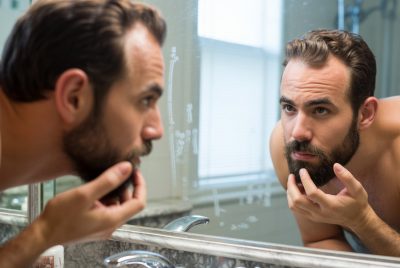
Razor bumps can turn what should be a simple grooming routine into days of redness, itching, tenderness, and uneven skin. They often appear on the face and neck after shaving, but they can also develop on the legs, underarms, bikini area, scalp, or anywhere else hair is removed.
Razor bumps are commonly caused by hairs growing back into the skin instead of outward. The medical term is pseudofolliculitis barbae (PFB). After a hair is cut, particularly very close to the skin, its sharp end can curve back and penetrate the surrounding skin. Your body recognizes that hair as something that should not be there and responds with inflammation.
People with coarse or tightly curled hair tend to experience razor bumps more frequently because curved hairs are more likely to grow back toward the skin. However, anyone who shaves, waxes, or plucks hair can develop them.
Getting rid of razor bumps usually requires two things: calming the inflammation you already have and changing the grooming habits that caused the bumps in the first place. Gentle exfoliation, proper shaving technique, moisturization, and giving irritated skin time to recover can make a significant difference.
“Shave in the direction that the hair grows.”
— American Academy of Dermatology
Key Takeaways
- Razor bumps usually develop when freshly cut hairs curve back into the skin and trigger inflammation.
- Avoid shaving over active bumps repeatedly, picking them, or digging out trapped hairs.
- Warm water, moisturizing shaving products, sharp blades, and shaving with the direction of hair growth can reduce irritation.
- Ingredients such as salicylic acid and glycolic acid may help remove dead skin that can trap emerging hairs.
- Moisturizing is important because excessive exfoliation and aggressive shaving can weaken the skin barrier.
- Recurrent, painful, infected, or scarring razor bumps should be evaluated by a dermatologist.
- Preventing new bumps is generally more effective than repeatedly treating them after every shave.
| Topic | Quick Summary |
|---|---|
| What Causes Razor Bumps | Hairs curl back into the skin after shaving, causing inflammation and irritation. |
| Best First Step | Pause shaving for a few days to let the skin recover and trapped hairs grow outward. |
| Helpful Ingredients | Salicylic acid and glycolic acid can exfoliate dead skin and help prevent trapped hairs. |
| Shaving Technique | Shave with the direction of hair growth using light pressure and short strokes. |
| What to Avoid | Do not pick, squeeze, or dig out ingrown hairs, and avoid shaving over irritated skin. |
| Prevention | Use warm water, shaving cream, sharp blades, regular moisturizing, and gentle exfoliation. |
| When to See a Dermatologist | Seek help if bumps are painful, infected, recurring, scarring, or do not improve after several weeks. |
| Recommended Products | First Aid Beauty Ingrown Hair Pads, Paula’s Choice 2% BHA, CeraVe SA Lotion, and Tend Skin Solution. |
4 Products to Consider for Razor Bumps and Bumpy Post-Shave Skin
Products cannot compensate for poor shaving technique, but the right formula can complement a good routine.
1. Tend Skin Solution


Say goodbye to razor bumps, ingrown hairs, and post-shave irritation with Tend Skin Ingrown Hair Solution. Designed for both men and women, this powerful toner helps reduce the appearance of ingrown hairs, razor bumps, and burns, leaving your skin smooth and irritation-free. Whether used after shaving, waxing, or dermaplaning, it soothes the skin while acting as a facial toner to enhance your glow. Made in the USA and cruelty-free, Tend Skin offers a simple yet effective solution for achieving flawless skin.
- Effective Relief: Helps reduce the appearance of razor bumps, ingrown hairs, and irritation.
- Multi-Purpose: Can be used as an aftershave, post-wax treatment, or facial toner.
- Cruelty-Free: Made in the USA with no animal testing.
- Strong Scent: Some users may find the floral fragrance overpowering.
- Drying Formula: May cause dryness for sensitive skin types.
- Pricey: Higher cost compared to other ingrown hair treatments.
Best for: Targeted post-shave care
Tend Skin Solution is specifically marketed for the appearance of razor bumps and ingrown hairs.
The brand recommends applying a thin layer to dry skin after shaving. For existing bumps, it also suggests applying the product separately from shaving until the area improves.
Because post-shave skin can already be sensitive, start cautiously rather than repeatedly applying more product in an attempt to speed results.
2. First Aid Beauty Ingrown Hair Pads
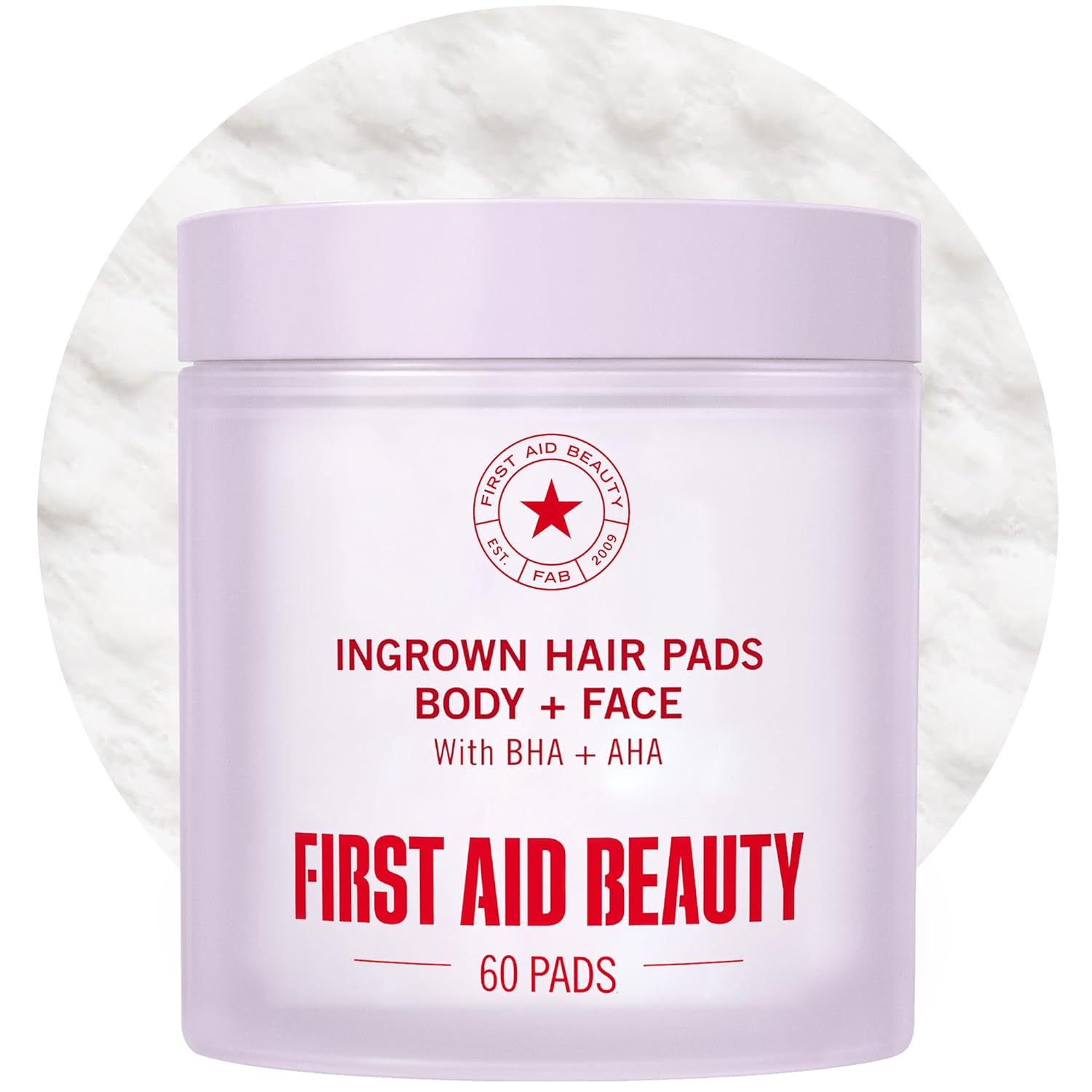


First Aid Beauty Ingrown Hair Pads are pre-soaked exfoliating pads designed to help reduce the appearance of ingrown hairs and razor bumps after shaving. The formula uses chemical exfoliation to remove dead skin buildup that can trap hairs beneath the surface, making it useful for areas such as the underarms, bikini line, legs, face, and neck. The convenient pad format also makes application quick and easy, especially for people who regularly deal with post-shave bumps.
- Easy Application: Pre-soaked pads make targeted use quick and mess-free.
- Exfoliating Formula: Helps remove dead skin that can contribute to trapped hairs.
- Multi-Area Use: Suitable for areas such as the bikini line, underarms, legs, face, and neck.
- Higher Price: Costs more than many basic liquid exfoliating treatments.
- May Irritate: Exfoliating ingredients can feel strong on very sensitive or freshly shaved skin.
- Ongoing Use: Regular application may be needed to maintain smoother-looking skin.
Best for: Convenient exfoliation for the body, bikini area, face, and neck
These pre-soaked pads combine glycolic acid and salicylic acid, giving you both AHA and BHA exfoliation.
The formula is designed to help remove dead skin that can trap hairs and includes aloe and witch hazel. The brand recommends beginning the day after shaving or waxing rather than immediately afterward.
The pad format can also make application easier across areas such as the legs and underarms.
3. Paula’s Choice Skin Perfecting 2% BHA Liquid Exfoliant


Paula’s Choice Skin Perfecting 2% BHA Liquid Exfoliant is a leave-on facial exfoliant formulated with 2% salicylic acid. It helps remove dead skin buildup, unclog pores, and smooth uneven texture, which can be useful for skin that is prone to post-shave bumps and ingrown hairs. Its lightweight liquid texture makes it easy to apply to areas such as the face and neck without physical scrubbing.
- 2% Salicylic Acid: Helps exfoliate inside pores and around hair follicles.
- Lightweight Formula: Easy to apply without heavy or greasy residue.
- Multi-Purpose Use: Targets bumps, clogged pores, blackheads, and uneven texture.
- May Cause Dryness: Frequent use can dry or irritate sensitive skin.
- Not Shave-Specific: Designed as a facial exfoliant rather than specifically for razor bumps.
- Gradual Results: Consistent use may be needed before noticeable improvement.
Best for: Salicylic-acid exfoliation
This leave-on exfoliant contains 2% salicylic acid and is designed to remove accumulated dead skin while clearing pore buildup.
Although it is not exclusively a razor-bump treatment, a BHA product can be useful for people whose post-shave bumps are associated with congested, bumpy skin.
Start gradually if your skin is sensitive, particularly if you already use other exfoliating products.
4. CeraVe SA Lotion for Rough & Bumpy Skin


CeraVe SA Lotion for Rough & Bumpy Skin is a fragrance-free body lotion that combines salicylic acid and lactic acid with hydrating ingredients such as hyaluronic acid and ceramides. It helps exfoliate rough, uneven skin while adding moisture, making it a useful option for areas that feel dry or bumpy after shaving. The formula is designed for the body and can work well on areas such as the legs, arms, and other frequently shaved spots.
- Exfoliates and Moisturizes: Combines exfoliating acids with hydrating ingredients.
- Fragrance-Free Formula: Suitable for people who prefer simpler body-care products.
- Good for Large Areas: Easy to apply across the legs, arms, and other body areas.
- Body-Focused Formula: Not primarily designed for use on the face.
- May Sting Irritated Skin: Exfoliating acids can feel uncomfortable on freshly shaved areas.
- Not a Direct Treatment: Helps with rough, bumpy texture rather than specifically treating ingrown hairs.
Best for: Body areas that need exfoliation and moisture
CeraVe SA Lotion combines salicylic acid and lactic acid with hydrating ingredients including hyaluronic acid and ceramides.
This combination makes it useful when the skin around shaved areas feels both rough and dry. The formula is designed to exfoliate while supporting moisture and the protective skin barrier.
It is primarily intended for the body, so follow the product directions regarding where and how frequently to use it.
What Are Razor Bumps?
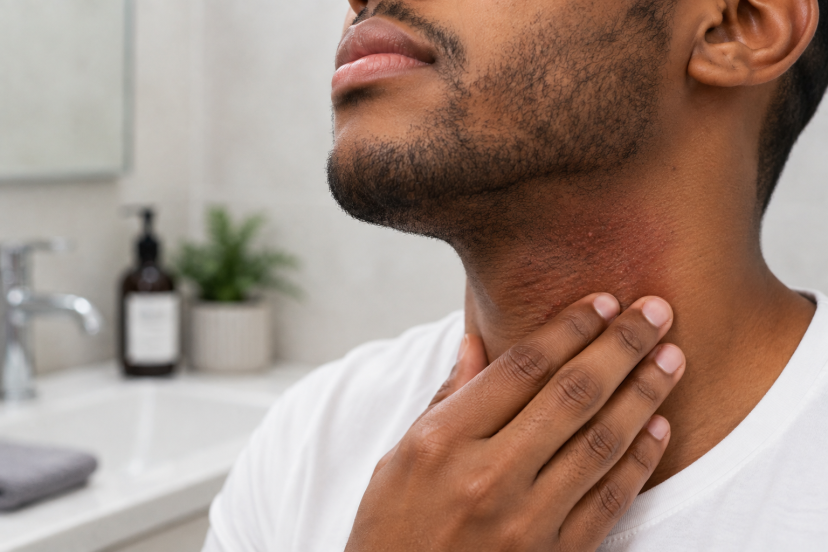
Razor bumps are small inflammatory bumps that form around hair follicles after shaving or another type of hair removal.
They may look like:
- Small red or skin-colored bumps
- Pimple-like spots
- Visible trapped or curled hairs
- Dark spots after inflammation disappears
- Tender or itchy patches
- Small pustules in more irritated areas
Razor bumps are especially common along the neck and jawline because beard hairs may grow in several different directions there. They can also develop on the scalp, legs, underarms, and pubic area.
The closer the shave, the greater the possibility that a freshly cut hair will retract beneath the skin or curve back toward it.
Razor Bumps vs. Razor Burn
Although people often use the terms interchangeably, razor bumps and razor burn are not exactly the same thing.
Razor burn is primarily irritation caused by friction and shaving trauma. It may appear immediately or shortly after shaving as redness, burning, stinging, sensitivity, or dry patches.
Razor bumps involve the hair follicle itself. They usually develop when a hair becomes ingrown after shaving and creates an inflammatory reaction.
It is possible to have both conditions at the same time.
Another condition called folliculitis can also resemble razor bumps. Folliculitis involves inflammation of the hair follicle and may sometimes result from infection. Razor bumps and folliculitis can coexist, which is one reason persistent or pus-filled bumps may need professional evaluation.
How to Get Rid of Razor Bumps
Existing razor bumps rarely disappear instantly. Your goal should be to decrease irritation while allowing trapped hairs to grow naturally toward the surface.
1. Give Your Skin a Break From Shaving
One of the most effective things you can do is temporarily stop shaving the affected area.
Every time a razor passes over inflamed skin, it creates additional friction and can cut emerging hairs even shorter.
The American Academy of Dermatology notes that stopping shaving allows trapped hairs to grow out and the skin to heal. When shaving is completely stopped, improvement can take several weeks, with more stubborn cases requiring considerably longer to fully resolve.
Even a shorter break can be helpful if growing the hair out completely is not practical.
2. Use a Warm Compress
Apply a clean, warm, damp washcloth to the affected area for approximately five to ten minutes.
Warm water can soften both the skin and hair, making it easier for an ingrown hair to naturally move toward the surface.
DermNet includes warm-water compresses among measures that can help soothe irritated areas.
Do not aggressively squeeze the bump after using the compress.
3. Do Not Pick or Dig Out Ingrown Hairs
Seeing a trapped hair can make tweezers tempting, but digging beneath the skin creates additional injury.
Picking can:
- Increase inflammation
- Introduce bacteria
- Cause bleeding
- Create dark marks
- Increase the risk of scars
The American Academy of Dermatology specifically advises against plucking hairs inside razor bumps.
If the hair tip has naturally emerged above the surface, leave it alone or seek professional advice rather than digging into the skin.
4. Introduce Gentle Chemical Exfoliation
Dead skin cells accumulating around a follicle can make it harder for new hair to emerge properly.
Chemical exfoliants can help loosen this buildup.
Common ingredients include:
Salicylic Acid
Salicylic acid is a beta hydroxy acid (BHA) commonly used in products designed to exfoliate skin and clear pore buildup.
It can be particularly useful when bumps are accompanied by rough texture or clogged follicles.
Glycolic Acid
Glycolic acid is an alpha hydroxy acid (AHA) that exfoliates the surface of the skin.
DermNet notes that glycolic-acid preparations can exfoliate the skin surface and may help reduce the development of new inflamed spots associated with pseudofolliculitis barbae.
Start slowly. Using several acids, scrubs, retinoids, and other strong ingredients at once can create more irritation than the original razor bumps.
5. Moisturize the Area
Exfoliation alone is not enough.
Repeated shaving and active skincare ingredients can leave the skin dry and vulnerable. A simple moisturizer can help support the skin barrier and reduce dryness.
Look for formulas with ingredients such as:
- Ceramides
- Glycerin
- Hyaluronic acid
- Niacinamide
Fragrance-free options may be preferable if the area is already sensitive.
6. Use a Cool Compress for Immediate Irritation
After shaving, a cool, damp cloth can help calm the skin.
The American Academy of Dermatology specifically recommends placing a cool, damp washcloth on freshly shaved skin after rinsing away shaving cream.
This will not remove an ingrown hair, but it may make the immediate post-shave irritation more comfortable.
How to Prevent Razor Bumps From Coming Back
Treating today’s bumps without changing your shaving routine means the cycle is likely to repeat.
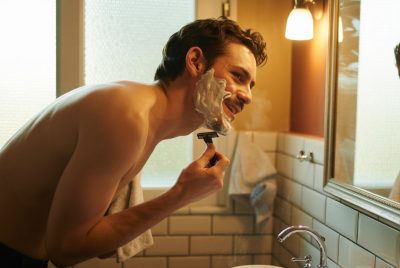
Shave After Showering
Hair is easier to cut when it is hydrated and softened.
The American Academy of Dermatology recommends wetting the skin and hair before shaving and notes that shaving after showering is particularly useful because the skin and hair are already warm and moist.
If you cannot shower first, place a warm washcloth over the area before shaving.
Always Use Shaving Cream or Gel
Dry shaving creates unnecessary friction.
Apply a moisturizing shaving cream or gel and allow it to sit briefly before beginning. People with easily irritated skin can look for products specifically formulated for sensitive skin.
Learn Which Direction Your Hair Grows
This is one of the most important steps for people who frequently develop razor bumps.
Hair does not always grow downward. On areas such as the neck, hairs may point sideways or even grow in several directions.
Examine the area before shaving and follow the natural direction of growth.
Dermatologists generally recommend shaving with the grain rather than against it for people prone to razor bumps.
Do Not Stretch Your Skin
Pulling skin tight may temporarily produce a closer shave, but it can allow freshly cut hairs to retract beneath the surface afterward.
DermNet and the American Academy of Dermatology both advise avoiding stretching the skin while shaving.
Use Short, Light Strokes
Pressing harder does not necessarily produce a better shave.
Let the razor do the cutting.
Use short strokes and avoid going over the same area repeatedly. DermNet advises avoiding shaving the same spot twice when possible.
Replace Dull Blades
A dull razor tends to pull at hair rather than cutting it efficiently, increasing friction and irritation.
The American Academy of Dermatology recommends changing disposable razor blades after approximately five to seven shaves and rinsing the blade after each swipe.
Store the razor somewhere dry rather than leaving it wet in the shower.
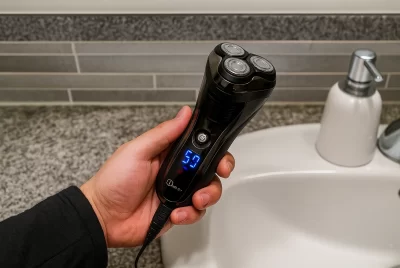
Consider an Electric Shaver
If blade shaving consistently causes bumps, an electric shaver may be worth trying.
Electric razors generally do not cut the hair as closely to the skin as traditional blades, which may decrease the chance that freshly cut hairs retract beneath the skin.
DermNet specifically lists switching from a blade razor to an electric shaver as one possible strategy for people with pseudofolliculitis barbae.
The trade-off is that you may not achieve the same extremely close shave.
What Not to Do When You Have Razor Bumps
Some popular habits can make the problem worse.
Avoid:
- Picking or squeezing bumps
- Digging into the skin with tweezers
- Shaving repeatedly over inflamed areas
- Using dull or dirty blades
- Pressing the razor aggressively against the skin
- Shaving without lubrication
- Applying multiple strong acids at once
- Scrubbing irritated skin aggressively
- Stretching the skin while shaving
More exfoliation is not always better. If your skin starts burning, peeling excessively, or becoming increasingly red, reduce the number of active products you are using.
How Long Do Razor Bumps Take to Go Away?
Minor razor bumps may improve as inflammation settles and the trapped hairs grow outward.
More persistent pseudofolliculitis can take weeks to clear.
DermNet reports that pseudofolliculitis barbae may subside approximately four to six weeks after stopping the hair-removal technique causing it, while the American Academy of Dermatology notes that some people who stop shaving may continue seeing improvement over several months.
The important factor is preventing new hairs from becoming trapped while existing bumps heal.
When Should You See a Dermatologist?
Occasional mild razor bumps can often be managed by changing shaving habits.
Seek professional advice when bumps:
- Keep returning despite changing your shaving technique
- Become extremely painful
- Contain significant pus
- Develop spreading redness or swelling
- Leave raised scars
- Cause persistent dark marks
- Become large or deep
- Do not improve after several weeks
Persistent bumps may not simply be ingrown hairs. Folliculitis, acne, dermatitis, and other skin conditions can sometimes look similar.
A dermatologist may recommend prescription treatments or longer-term options such as laser hair reduction when appropriate. DermNet notes that treatments used in more significant cases can include prescription topical therapies, antibiotics when indicated, and laser epilation.
Building a Razor-Bump-Friendly Shaving Routine
The simplest routine is often the most effective.
Before shaving:
Wash the area gently and soften the hair with warm water.
During shaving:
Use plenty of shaving cream, shave in the direction of growth, use light pressure, and avoid repeatedly passing over the same skin.
Immediately afterward:
Rinse thoroughly and apply a cool, damp washcloth.
Later:
Use gentle exfoliating or moisturizing products according to their instructions rather than layering several strong treatments together.
The goal is not simply getting today’s bumps to disappear. It is creating a shaving routine that makes new ones less likely to form.
Frequently Asked Questions
1. What gets rid of razor bumps fast?
There is no guaranteed overnight cure. Giving the area a break from shaving, using warm compresses, avoiding picking, moisturizing, and gradually introducing an appropriate chemical exfoliant can help the skin recover. Severe or infected-looking bumps should be evaluated by a healthcare professional.
2. Should you pop razor bumps?
No. Popping, squeezing, or digging into razor bumps can increase inflammation and raise the risk of infection, dark marks, and scarring. Allow the trapped hair to grow toward the surface naturally.
3. Does salicylic acid help razor bumps?
Salicylic acid exfoliates dead skin and can help keep follicular openings clearer, which may make it useful in a routine for bumpy or ingrown-hair-prone skin. Start gradually, especially if your skin is sensitive, and avoid combining several strong exfoliants at once.
4. Is it better to shave with or against the grain?
People prone to razor bumps are generally advised to shave in the direction their hair grows. Shaving against the grain may produce a closer result, but it can also increase irritation and the likelihood of hairs becoming trapped beneath the skin.
5. How can I permanently stop razor bumps?
Avoiding the hair-removal method responsible for the bumps is the most reliable way to stop that trigger. If you still need to remove hair, improving shaving technique or switching to an electric shaver may reduce recurrence. For persistent cases, a dermatologist can discuss longer-term approaches such as laser hair reduction.
The Bottom Line
Getting rid of razor bumps is less about finding one miracle product and more about breaking the cycle that creates ingrown hairs.
Let irritated skin recover, avoid picking, soften hair before shaving, use a sharp razor with plenty of lubrication, shave with the direction of growth, and consider gentle exfoliation to prevent dead skin from trapping new hairs.
Products containing salicylic acid or glycolic acid can support that routine, while moisturizers can help maintain the skin barrier. But technique matters just as much as what you apply afterward.
If the bumps continue returning, become infected, or begin causing significant scarring or discoloration, talk with a dermatologist. Persistent razor bumps are treatable, and changing the way hair is removed can make a much bigger difference than repeatedly treating irritation after it appears.